📌 Problem Statement
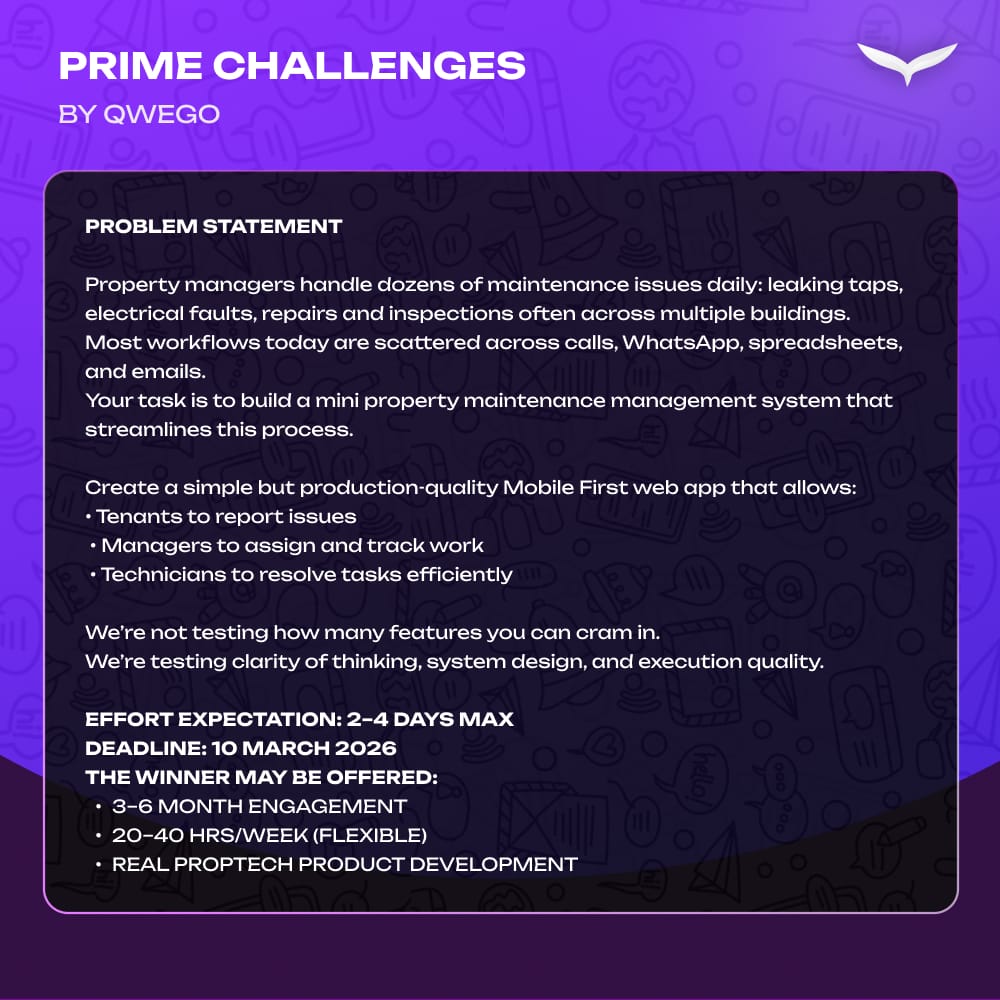
Property managers handle dozens of maintenance issues daily across multiple buildings and teams. Most workflows today are scattered across calls, WhatsApp, spreadsheets, and emails.
Your task is to build a mobile-First mini property maintenance management system that streamlines this process. Create a simple but production-quality web app that allows:
Tenants to report issues
Managers to assign and track work
Technicians to resolve tasks efficiently
We’re testing clarity of thinking, system design, and execution quality.
👥 Roles
Your system must support:
Tenant
Property Manager
Technician
Each role should have different permissions.
⚙️ Core Features Required
✅ Authentication + role-based access
✅ Tenants submit maintenance requests • title • description • images (file upload)
✅ Managers: • view all tickets • assign technicians • change priority/status
✅ Technicians: • view assigned tasks • update progress
✅ Status flow: Open → Assigned → In Progress → Done
✅ Activity log per ticket (e.g., created, assigned, status changes)
✅ Basic notifications (email or in-app)
🎯 What We’re Evaluating
We care more about how you build, not just what you build.
🔥 Backend architecture 🔥 Database design 🔥 Auth + role management 🔥 File uploads 🔥 Workflow logic 🔥 Clean UI/UX 🔥 Code quality & structure 🔥 Deployment & documentation
Bonus points: Tests | Docker | Thoughtful UX | Realistic edge cases handled
🧠 Constraints
Time expectation: 2–4 days max
Use mock/demo data
No paid APIs
Keep scope focused
Don’t over-engineer
🏆 Prize
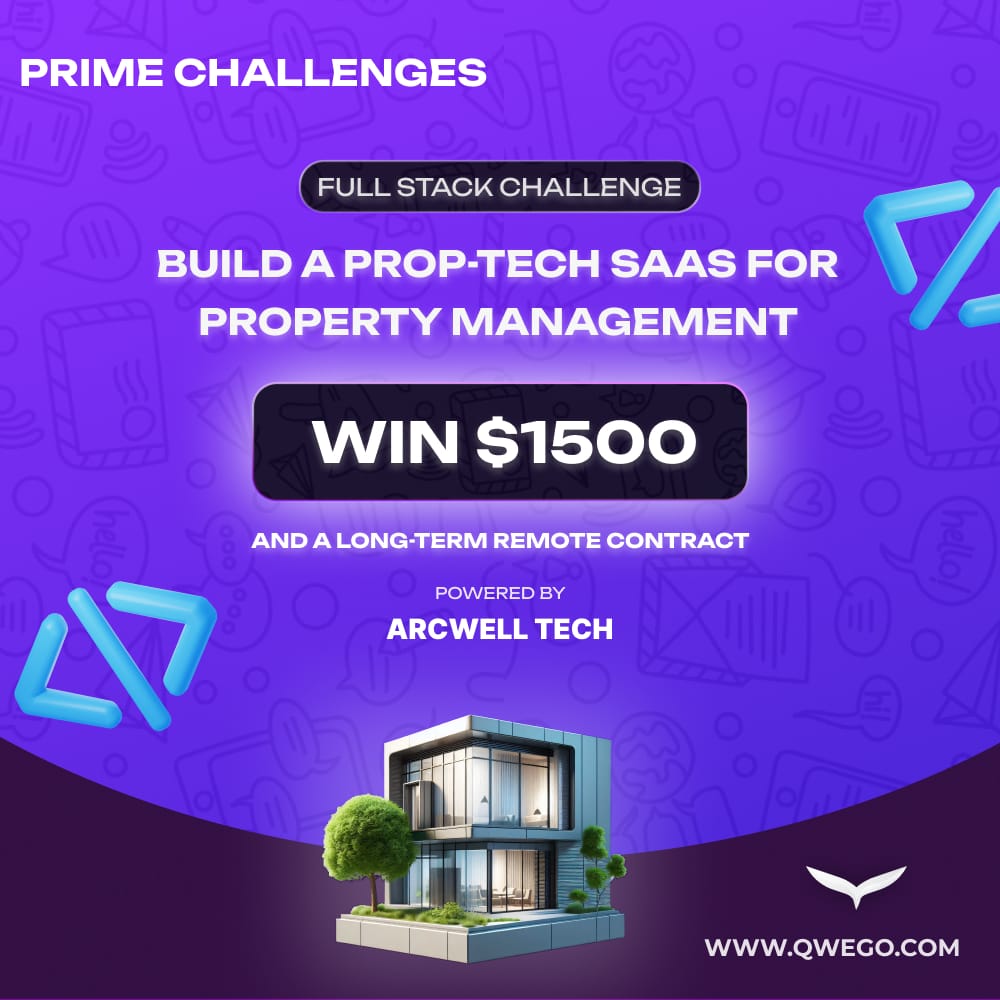
🥇 Winner: $1,500 USD
Plus: 🤝 Long-Term Contract Opportunity
The winner may be offered:
3–6 month engagement
20–40 hrs/week (flexible)
Real proptech product development
Paid hourly or milestone-based
Opportunity to work directly with product & engineering leadership
This challenge is designed to identify long-term collaborators, not just one-off freelancers.
⚠️ How to Participate
Submit via Qwego:
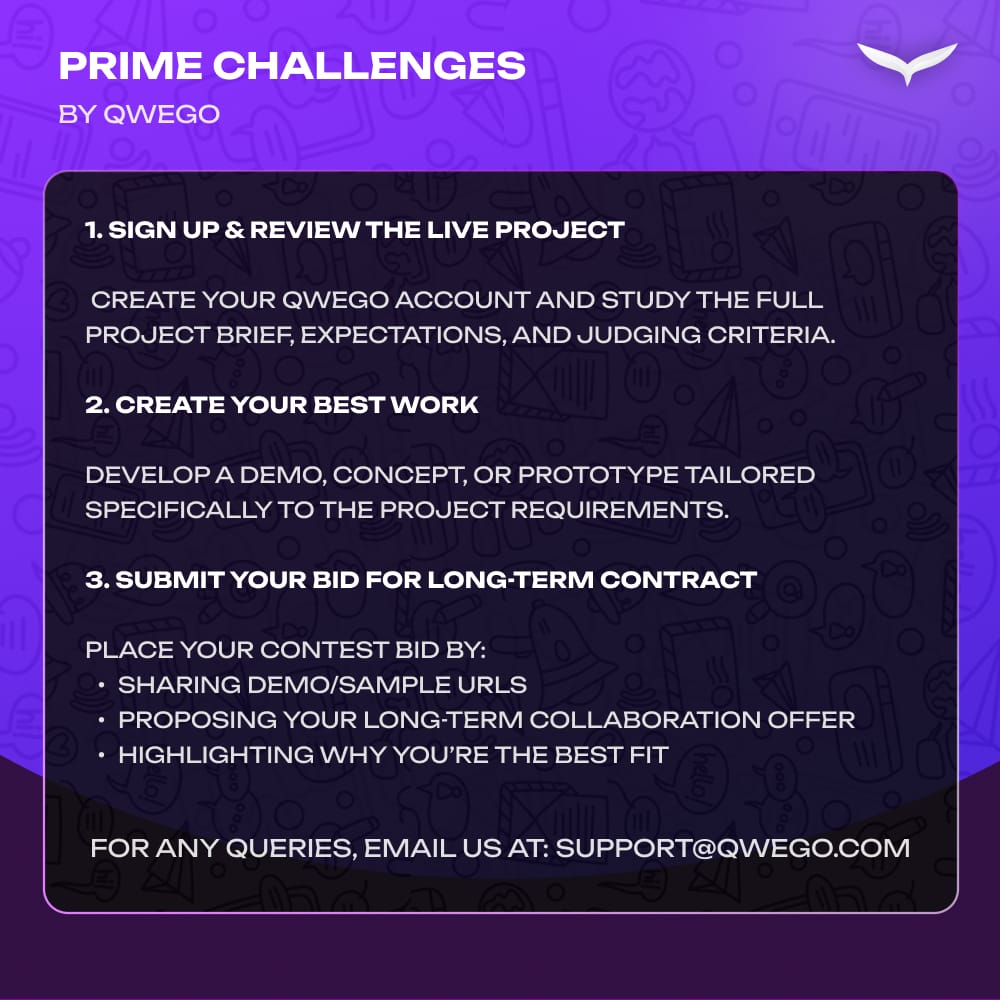
Step 1: Sign up on Qwego Carefully review the full project brief and requirements.
Step 2: Build & Submit a Demo
Ideal Proposal: Create a project-specific demo/sample based on the brief. Then submit your bid with links only, including:
🔗 Demo link (live URL, GitHub, Loom, Drive, etc. | must be public)
✍️ 2–4 line explanation of what you built
📈 Long-term collaboration proposal (availability + engagement model)
🚫 No generic portfolios ✅ We evaluate working demos only
Your work + thinking matter more than promises.
📅 Deadline
Last date for submission: 15th March
❓ FAQs
1. Is KYC mandatory?
Yes. All freelancers must complete KYC verification on Qwego before applying to any project.
2. How should I share my submission?
Host your demo on: Live site | GitHub | Figma | Framer | Google Drive | Loom 📎 Share a publicly accessible link in the bid description.
3. Why is the bid asking for budget? [IMP]
The $1,500 prize amount is fixed and will be awarded to the selected winner.
The budget field in your bid is not related to the contest prize. It is used solely to evaluate your proposed terms for a potential long-term collaboration.
Please use the budget field to:
A. Enter your monthly retainer fee as the project fee, or
B. If you work on an hourly basis, provide a reasonable monthly estimate based on your expected availability
4. Can I use any tech stack?
Yes. Use any stack you’re comfortable with (React, Next, Node, Django, Rails, etc.). We value clean architecture over specific technologies.
5. Do I need pixel-perfect UI?
No. Clean, usable, and thoughtful beats fancy visuals.
6. Will my solution be used in production?
Winning entry may evolve into real internal tools or MVPs.
7. Can I submit via Email?
We recommend signing up and completing KYC to participate, but you may also submit your entry by emailing challenges@qwego.com. If your entry is awarded, KYC verification will be required at that stage.
Support
For any queries or assistance, Feel free to reach out at support@qwego.com.