

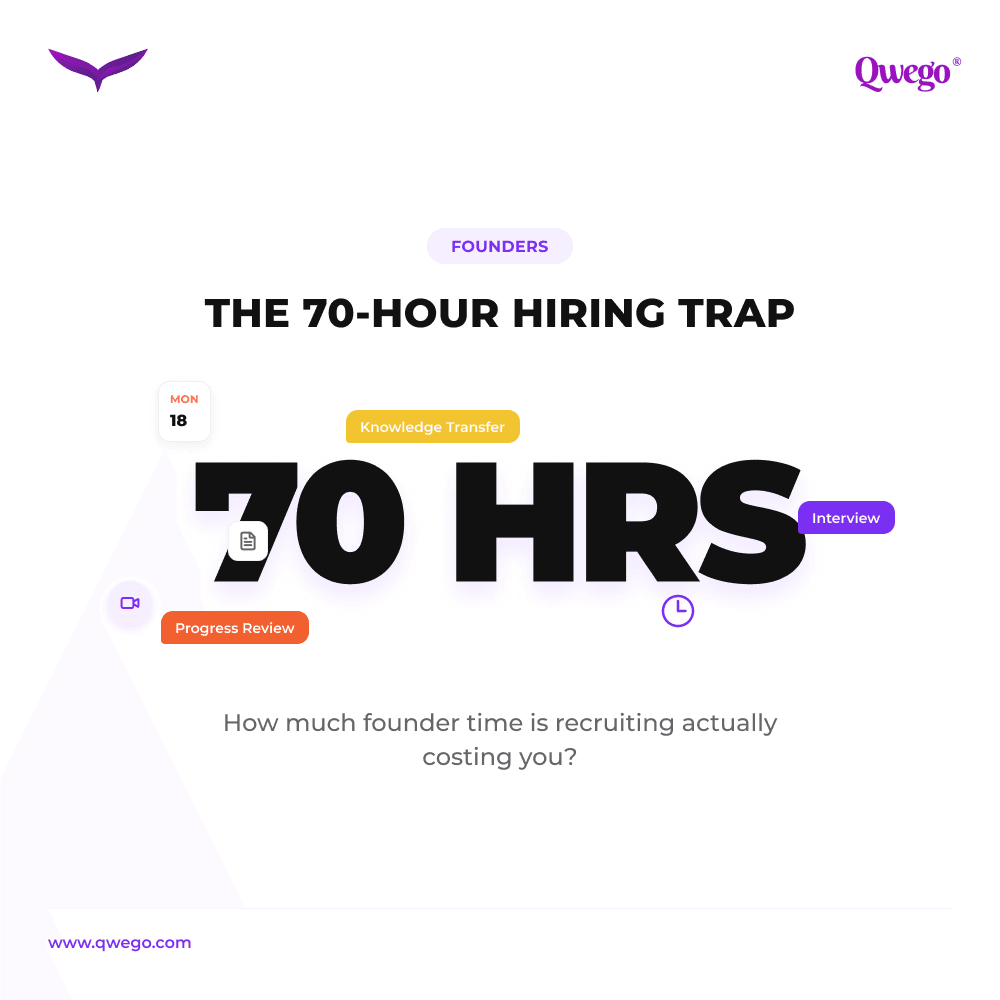
Quick question before we get into it: when was the last time you actually sat down and calculated how many hours you spent this month on hiring?
Not the fun parts. The actual grind: writing job posts, sorting through profiles that all start to blur together, scheduling calls, doing intro interviews, following up with people who never respond, onboarding someone who then disappears three weeks in.
Most founders never do this math. That’s exactly the problem.
The Real Number Is Higher Than You Think
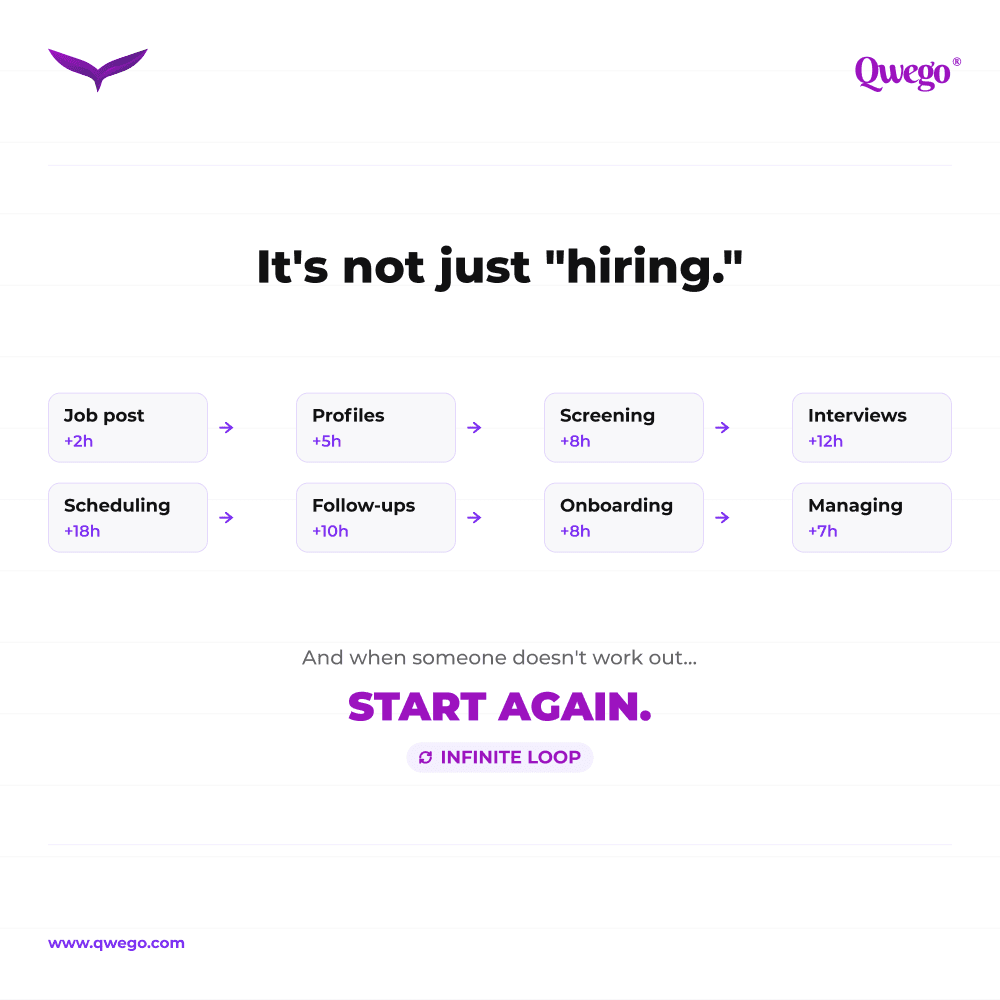
When founders actually track it, the number usually lands somewhere between 60 and 80 hours a month. Read that again. That’s almost two full work weeks, every single month, spent on logistics instead of the actual business.
And it’s not a one-time cost. It repeats every time someone doesn’t work out, every time you need a new skill set for a new phase of the company, every time a freelancer ghosts mid-project.
Here’s the part that stings: none of those hours show up in a pitch deck. There’s no metric that says “founder hours lost to recruiting.” So it quietly drains time and nobody flags it, until you look up and realize you haven’t talked to a customer in two weeks.
Why This Happens Even to Smart Founders
It’s not that founders are bad at hiring. It’s that hiring well takes a specific kind of skill and infrastructure that most early-stage teams simply don’t have yet.
A few reasons this trap catches almost everyone:
- No vetting pipeline. Every candidate starts from zero trust, so you have to re-verify skills and reliability from scratch every time.
- No management layer. Once someone’s hired, you’re also the one checking in, resolving friction, and managing scope creep.
- Sunk cost thinking. After investing weeks in finding someone, it’s tempting to keep working with a mediocre fit rather than start over.
- Everything is urgent. Early-stage founders hire reactively, under pressure, which almost guarantees rushed decisions.
What This Actually Costs You
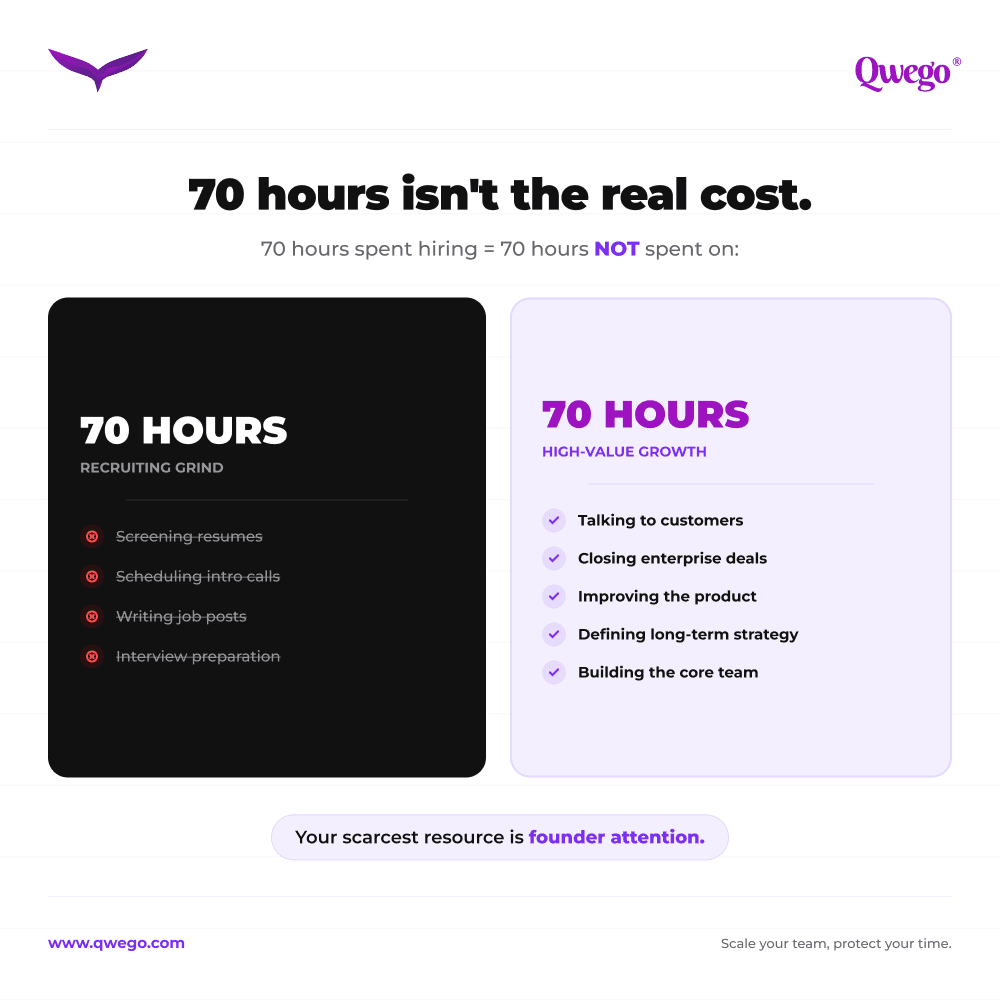
It’s not just the hours. It’s what those hours would have been worth somewhere else.
Every hour spent scrolling freelancer profiles is an hour not spent talking to a user who could tell you exactly what’s broken about your product. Every hour in an intro call with someone who isn’t the right fit is an hour not spent refining your pitch, closing a deal, or thinking clearly about strategy.
Time is the one resource you can’t raise more of. Founders obsess over runway in dollars, but rarely think about runway in attention and hours, which is arguably the scarcer resource in the early days.
So What Do the Smart Ones Do Instead?
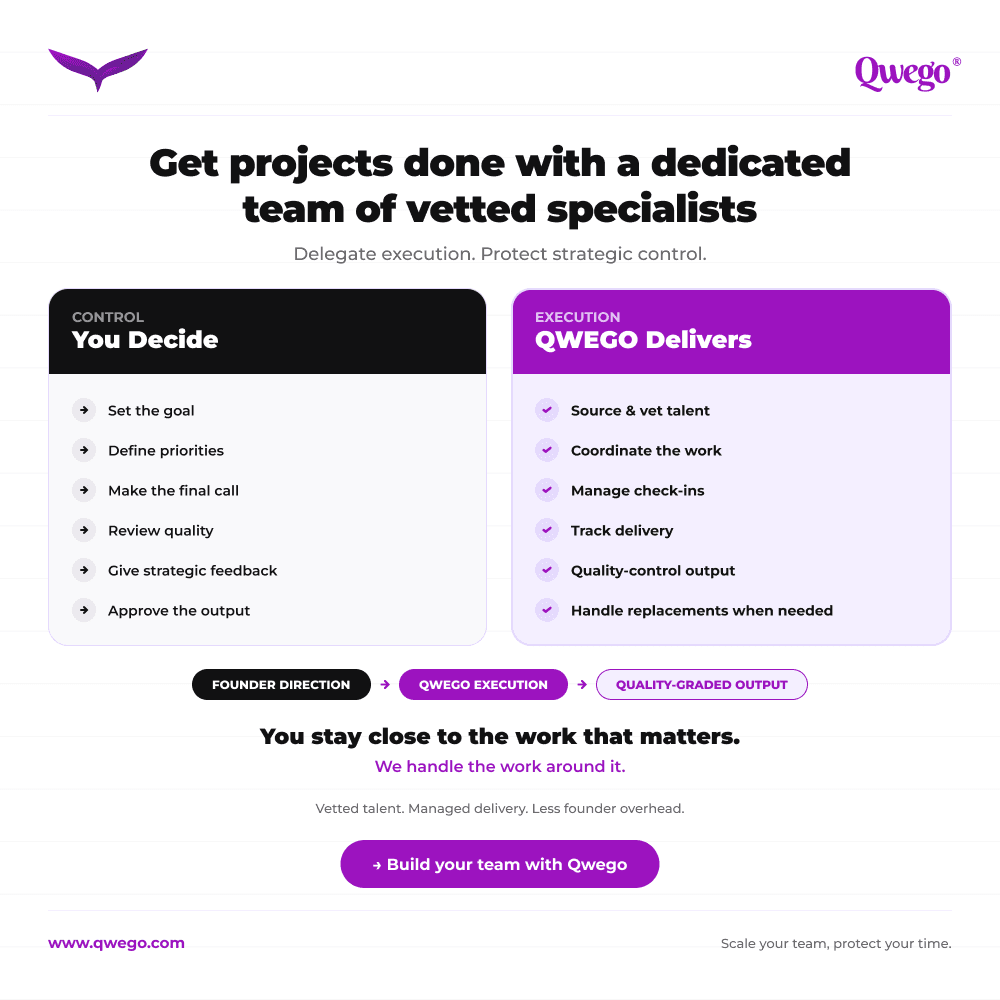
They stop treating hiring as something they personally have to do from scratch every time. Instead, they look for ways to plug into existing, pre-vetted pools of talent, with someone else handling the coordination and quality control.
A few shifts worth considering:
- Separate “who owns the decisions” from “who does the coordinating.” You should always own the former. You don’t have to own the latter.
- Use a managed model where vetting, matching, and check-ins are handled for you, so your job becomes reviewing outcomes, not chasing status updates.
- Build in replacement flexibility upfront. If a mismatch is fixable in days instead of weeks, the whole risk profile of hiring changes.
- Protect a non-negotiable block of time each week for the 20 percent of decisions only you can make.
The Bigger Point
Hiring isn’t the enemy. Doing it manually, from scratch, every single time, with no system behind you, is.
The smartest founders aren’t the ones who hire the most people or spend the most hours vetting. They’re the ones who figured out how to make hiring somebody else’s job, so theirs can stay focused on the decisions that actually move the company forward.
Hashtags: #FounderLife #StartupOps #TimeManagement #HiringTips #ProductivityHacks